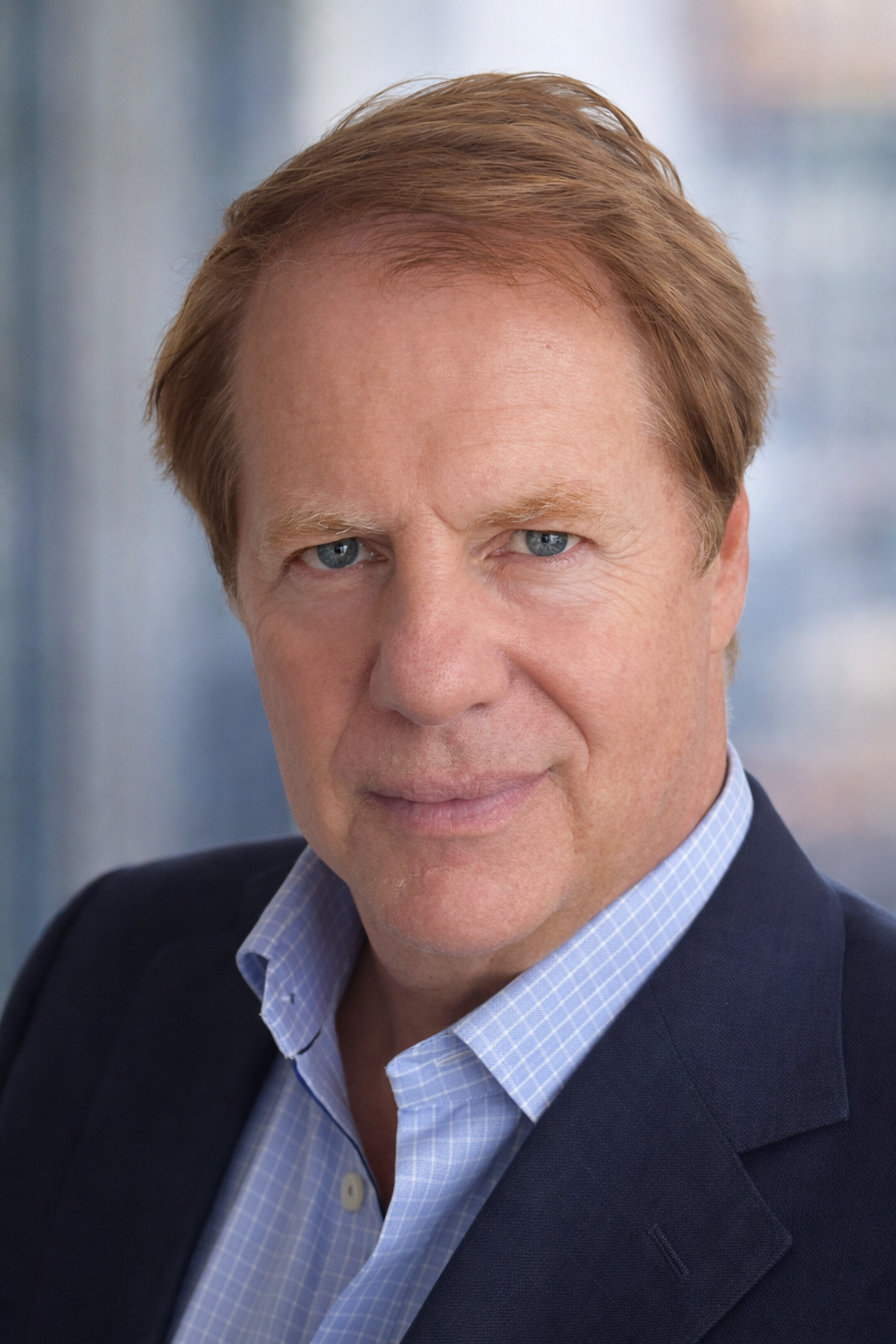
About — The Full Story
Graeme Hossie advises the boards of listed and pre-listing companies on governance, public markets strategy, capital allocation, and crisis preparedness — and provides confidential advisory support to individual CEOs navigating the specific demands of listed company leadership for the first time.
Graeme's advisory and principal development work is built on nine years of founding, building, listing, and operating a multinational public mining and resources development company at scale — across eight countries, two stock exchanges, multiple capital cycles, and the full range of conditions that international listed company leadership produces. What follows is the story that produced the practice.
The Professional Foundation
Graeme began his career at Bain & Company in London — analytical rigour, structured commercial strategy, global clients. He moved into venture capital and new business development at Piper Trust and Piper Private Equity, working across the lifecycle of early and later-stage consumer and retail businesses: concept, intellectual property, capital raising, management build, international distribution, and exit.
What this means for your boardThe habit of asking 'why is the model right' before 'what does the model say' is the single most useful discipline at board level. Most governance failures involve boards that accepted the management narrative without adequately stress-testing it. And sometimes vice-versa.
Co-founding London Mining PLC — 2005
In April 2005, Graeme co-founded London Mining PLC with a single partner and £1 million in seed capital from RAB Capital — a fund that returned over £30 million on that position within three years. The founding premise was clear: in a tightening iron ore environment, identify and develop assets the market had undervalued. What followed was nine years across two stock exchange listings, eight countries, $800 million in capital raised, and a company that at its peak carried an institutional investor register from Singapore to Norway. What that journey produced was not primarily a set of sector credentials. It was a tested framework for how companies are built, governed, and made to last — applicable wherever the conditions of building a listed company in a genuinely complex environment are present.
What this means for your boardThe capital structure decisions made in the founding phase determined the strategic optionality available to the company for the next decade. Early governance and capital architecture is the most consequential and most frequently underinvested phase.
Brazil — Transformational Value Creation (2006–2008)
In early 2006, London Mining negotiated an option on a break-even family iron ore operation in Minas Gerais, Brazil. Graeme executed a $100 million pre-IPO capital raise that funded the acquisition and transformation. Within twelve months: a tenfold production increase to 3.5 million tonnes per annum, national rail access, and materially improved pricing. An IPO of London Mining was made on the Oslo stock exchange raising a further $60m.
In August 2008, the Brazilian subsidiary was sold to ArcelorMittal for over $810 million — generating more than $700 million in profit on $100 million invested. $400m was returned to shareholders, debts paid, development capital tanks full.
Running concurrently: a hostile takeover attempt, accumulating 27% of shares within two weeks of first listing. Resolved through direct engagement with the acquirer's motivations and a structured competitive sale process that produced the $810 million exit. This was followed by an LSE:AIM listing which placed $115m of secondary shares in 2009.
What this means for your boardValue creation at this scale is governed as much by board decision-making as by operational execution. The decision to sell at $810 million — when the asset could have been developed further — required board discipline to realise value rather than hold for more.
Sierra Leone — Building a Nation's Industrial Backbone (2006–2014)
The Marampa iron ore project had been dormant for over forty years. London Mining built it from the challenge of a standing start in a remote greenfield environment into a $500 million annual export revenue operation, with capital investment approaching $1 billion over eight years. A parliamentary-approved development agreement, a 120-kilometre integrated bulk export logistics chain from greenfield to export transhipment facilities, thousands of employees, and community development frameworks with DFID, GIZ, and international NGOs. Offtake and finance agreements with Glencore, Vitol, Cargill.
First production and exports of high grade iron concentrate for the global steel industry within 2 years of governmental approvals, 1.8mtpa first phase production expanded to 3.5mtpa the following year then to 5mtpa with feasibility completed for 8mtpa and 15mtpa expansions.
The Marampa project required the simultaneous management of every governance dimension a listed company faces: shareholders, government, international bodies, significant finance and capital allocation, communities, contractors, lender management, trading customers, employees, training, team building, construction, operations, competitor actions, market shocks.
Awarded the Platts Global Award for Leadership in Raw Materials and Mining. 50,000 people lifted out of poverty (World Bank assessment), London Mining's operation represented 10% of Sierra Leone GDP. One of the largest enterprises, investors, taxpayers in the country.
What this means for your boardOperating across frontier jurisdictions with institutional investor accountability requires a governance architecture that most listed companies do not build — because they have not operated in those conditions.
Greenland, Saudi Arabia and Colombia (2007–2014)
Concurrent with Sierra Leone, London Mining advanced projects across three further jurisdictions. In Greenland: the first major mining exploitation licence granted in the territory, concluded after years of exploration and detailed feasibility planning with the government based on the significant economic and social impact of the project. In Saudi Arabia: a joint venture the National Mining Company, advanced from prior data through to bankable feasibility and EPC contracting stage. In Colombia: an industrial coking coal to coke operation built from greenfield — with a strategic exit commended by international NGOs for exemplary responsible community practice.
What this means for your boardManaging a multi-jurisdiction development portfolio requires a board that can assess governance risk across fundamentally different political, regulatory, and community environments simultaneously.
Leading Through Adversity — 2014 and the Decade That Followed
The governance framework that came out of this experience — understanding precisely what holds under maximum legal, regulatory, and operational stress, and what does not — is the most specific and durable contribution I bring to the boards and CEOs I work with.
In October 2014, London Mining entered administration. Three external forces converged simultaneously: a 70% iron ore price collapse - making operation non-viable and closing the sector to finance; the Ebola epidemic - which challenged operations, safety, costs and quashed a negotiated deal with a major steel company which would have resolved the company's position; and a creditor withdrawal creating a financing crisis which cancelled pending and required development bank facilities.
The board managed the crises and administration without criticism. All employee obligations were met. What followed was a long period of sustained UK regulatory scrutiny - the kind that companies, boards and officers operating in frontier jurisdictions can face when something goes wrong, irrespective of policies and board planning - which concluded in February 2026 with a full legal resolution and no findings of wrongdoing against the company or any individuals.
What this means for your boardMost governance frameworks are designed for growth conditions. The boards that survived the scenarios they did not anticipate were the ones that had designed for those scenarios in advance.
Advisory Practice — Present
Since 2015, Graeme has worked as a board advisor, NED, co-founding partner, and venture investor across mining & metals, food, industrial cleantech, ai-based platform for complex service industry, and capital markets. The Advisory practice serves mining and resource companies and international growth companies facing complex governance, multi-stakeholder and public markets environments. He also provides confidential Advisory support to CEOs navigating public markets and issues where direct experience is the most relevant counsel available.
The underlying philosophy — developed across nine years of building and a further decade of advising — is straightforward: the most important governance question is rarely how to do something well. It is whether the right things are being done at all. The discipline of asking that prior question, of stepping back from operational excellence to interrogate strategic direction, is what distinguishes boards that hold under pressure from those that perform well only in favourable conditions.
He works with a small number of listed companies across AIM, the FTSE 250, TSX, ASX, and NASDAQ/NYSE, and with companies preparing to list on any of these exchanges.
Graeme also works with a network of partners as principal movers for development opportunities and joint ventures.
What this means for your boardThe gap between what most companies are structured to do and what public markets, regulators, and institutional investors actually require is where companies most frequently fail. Closing that gap before it becomes relevant is the work. Building value is the outcome.
"Execution creates value. Governance protects it. Capital discipline determines whether it endures."Contact Graeme